Batch a Small Production Day Without Recording the Wrong Versions
Batching can reduce repeated setup, but only if scripts, props and review status stay clear. Group practical tasks while keeping each piece’s factual and creative requirements distinct.
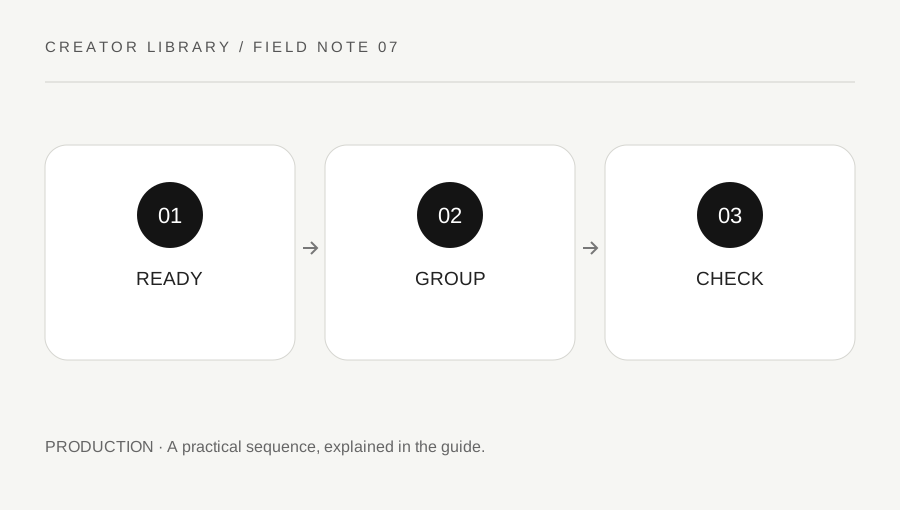
Original explanatory diagram. Examples illustrate a method or decision; they are not claims of personal testing.
Choose work that is actually ready
List the pieces you want to record and mark their status: draft, checked, awaiting permission or ready. Do not fill the day with unverified scripts merely to increase the number of takes. A missing fact or permission can invalidate footage that otherwise looks polished. Keep unresolved items outside the ready group until the responsible decision is made.
Confirm the output needs for each piece, including orientation, demonstration materials and sound requirements. Two videos about related subjects may still need different setups. A simple preparation sheet should identify the accepted script version and the source or prop required. Avoid relying on memory when several similar introductions will be recorded close together.
Group by useful setup changes
Arrange the session around practical similarities such as camera position, background or voiceover configuration. Leave space for a short test and review before the main recordings. Keep equipment stable and cables out of walking routes. Do not rush a physical demonstration or a safety-sensitive action because it appears in a content schedule.
Use clear take identifiers in your notes or supported recording workflow. Mark the piece and script version, then note a usable take or a known problem. This prevents a later editor from choosing the smoothest delivery of an outdated line. The aim is to reduce avoidable setup work while preserving the checks that make each piece accurate and usable.
Work through a three-piece session
Imagine a creator has three short explainers with one shared voiceover setup. Two scripts are checked, while the third awaits a source clarification. They record the first two in sections, review a sample and leave the third out of the session. They do not improvise a confident answer simply because the microphone is already set up.
For the second piece, a technical term changes after the first test read. They update the accepted script reference and record the replacement sentence with a clear take note. During editing, the note identifies which version should be used. This example shows a controlled small batch rather than a universal production quota or a claim that more recordings always mean more useful published content.
Review the handoff before ending the day
Check that each recorded piece has the needed coverage and intelligible sound. Identify missing pickups while the setup can still be recreated easily. Save and back up authorized sources through the approved process, with permission information and the accepted script version available. Do not erase cards or source storage until the relevant copies are verified according to your workflow.
Update the production status honestly: recorded is not the same as edited, checked or published. Leave a short next-step note for each piece and any issue that must be resolved before release. A successful batch day produces usable material with a clear review path, rather than a large folder of nearly identical takes whose status no one can explain.
Keep breaks and realistic capacity in the plan
Allow for listening fatigue, voice changes and ordinary setup delays. A plan that assumes uninterrupted perfect takes can create pressure to skip review just when attention drops. Use a small initial batch to learn your actual pace and revise later sessions from that experience. Do not invent a universal output target from someone else's production routine. Your useful capacity depends on the task, equipment, people and quality requirements, and it should leave room for corrections rather than treating them as failure.
A practical checklist
Choices are saved in this browser. Reset them here or clear this site’s browser storage.
Questions that come up
Should I record an unchecked script while the setup is ready?
Resolve material facts and permissions first. Convenience is not a good reason to create footage built on an unsupported claim.
Does batching mean every piece uses the same settings?
No. Group genuine similarities while respecting each piece’s output and demonstration needs.
Is recorded the same as ready to publish?
No. Editing, factual review, permissions and accessible alternatives still need the relevant checks.
References & scope
Background references checked on 18 October 2026. Worked examples and diagrams are original teaching material.