Correct Published Creator Content with a Clear Record
A correction should fix the audience’s misunderstanding and identify the affected versions. Start with the verified issue, then update the relevant media and text through the platform’s supported process.
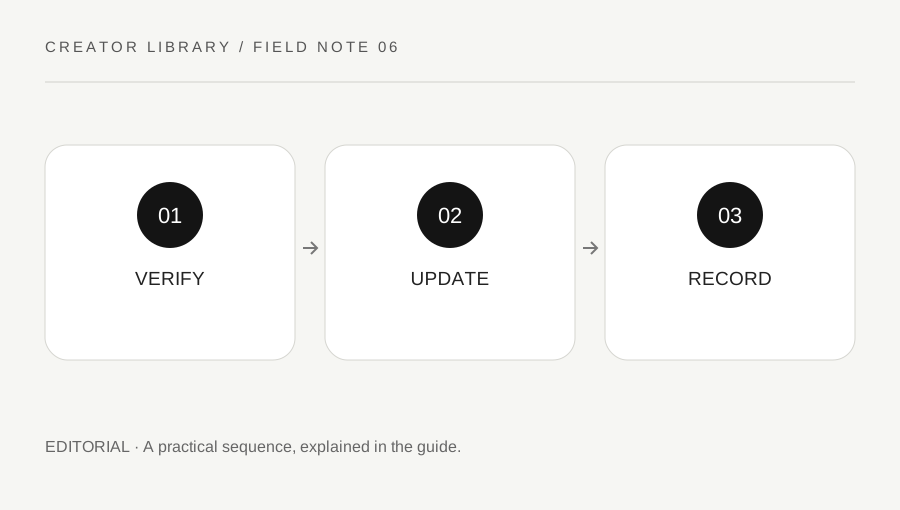
Original explanatory diagram. Examples illustrate a method or decision; they are not claims of personal testing.
Verify the specific error before changing content
Identify the statement, frame, caption or link at issue and compare it with the appropriate source. Keep the original report privately where useful. A viewer's question may reveal ambiguity rather than a factual error, so establish what needs changing before announcing a correction. Do not dismiss a plausible report solely because the original piece has performed well.
Separate a typo, an unclear explanation and a material factual mistake. They can require different levels of response. If the content involves high-stakes information, seek suitable qualified review and consider restricting access while the issue is assessed through the responsible process. A general creator workflow cannot determine the right legal or professional response for every publication.
Map every affected version
List the main video or article, captions, transcript, description, thumbnail, chapter labels and any derivative pieces that repeat the issue. A corrected spoken line does not fix an old graphic or a short clip already shared elsewhere. Keep the list manageable and identify which versions you control and which require another responsible person's action.
Read the current platform options for editing, replacing or annotating content. Do not assume a feature available on one service exists on another. Preserve authorized source files and the accepted revised export. If the correction changes timing, review captions and navigation. If it changes a source claim, update the reference and any explanatory wording that depended on it.
Work through a hypothetical wrong-number example
Imagine an explainer uses the wrong unit in a worked example. The creator checks the calculation, confirms the source and revises the narration, graphic and transcript. They inspect the corrected arithmetic rather than changing only the most visible number. A short derivative clip using the same example is included in the review.
Where an audience-facing correction is appropriate, they describe what changed plainly and avoid implying that the original statement was always correct. The example is hypothetical; it is not a rule for every typo. The important method is to trace the misunderstanding across the actual published forms and verify that the new version no longer communicates it.
Keep a concise correction record
Record the issue, evidence, changed versions, date and person responsible for review where relevant. Keep sensitive reports and private information out of public notes. The public explanation should contain what the audience needs to understand the change without exposing unnecessary personal details or turning the correction into an argument with the person who noticed it.
Retest the final output through the ordinary viewer experience. Check that old links do not lead to a misleading version and that any correction note is attached to the relevant content. Learn from the error by improving the specific check that failed. A useful correction process prioritizes accurate communication and a clear record over preserving the appearance that no mistake ever occurred.
Do not hide a substantive change inside a cosmetic update
If a revision changes the meaning of the advice or the conclusion, distinguish it from routine formatting in the record. A viewer who relied on the earlier statement may need to know what changed. Use the organization's editorial policy or an appropriate responsible review to decide the communication. This is different from announcing every punctuation fix. The practical principle is proportional clarity: make material changes understandable and keep the revision history accurate enough to explain which version people saw.
A practical checklist
Choices are saved in this browser. Reset them here or clear this site’s browser storage.
Questions that come up
Is changing the caption enough?
Only if the caption is the sole affected content. Check narration, graphics, transcript and derivatives for the same issue.
Should every typo receive the same response?
Use proportionate editorial judgment and the relevant policy. A material factual change differs from a cosmetic correction.
Can a replacement create new timing errors?
Yes. Recheck captions, chapters and links when the edit changes duration or section boundaries.
References & scope
Background references checked on 18 October 2026. Worked examples and diagrams are original teaching material.