Write Video Chapters as Useful Navigation
A chapter list should help a viewer find the part they need. Mark meaningful changes in the explanation, use accurate labels and test the published navigation rather than treating timestamps as decoration.
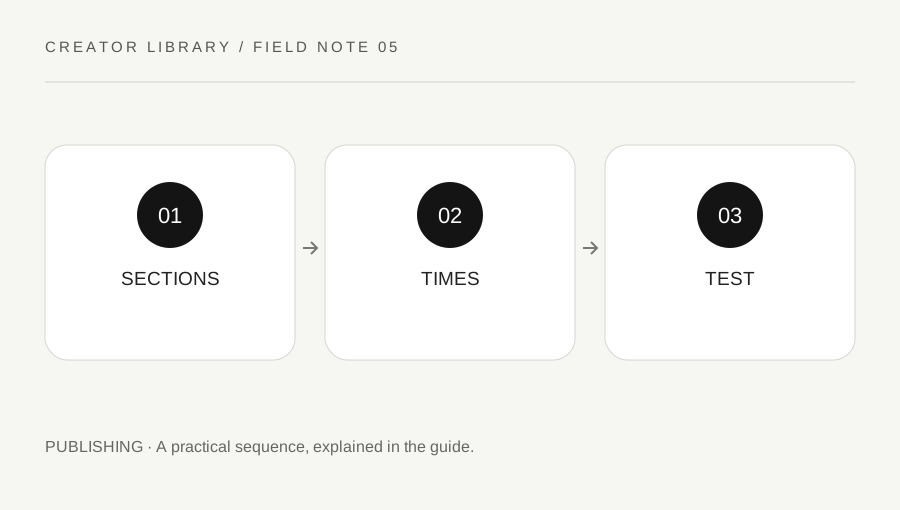
Original explanatory diagram. Examples illustrate a method or decision; they are not claims of personal testing.
Find the actual structure in the finished edit
Watch the accepted version and mark where the purpose changes: context, setup, demonstration, comparison and recap, for example. These labels are only a starting idea; use the structure your video actually has. A chapter should begin where its promised content starts, not at an earlier unrelated pause that happens to make the timing look tidy.
Create the list from the final timeline rather than an old script estimate. Later edits can move every timestamp. Keep the chapter draft connected to the version you reviewed and update it when the export changes. A useful navigation list reflects the viewer's task, not the editor's internal scene numbers or a desire to insert as many searchable phrases as possible.
Use labels that describe the destination
Choose concise titles that tell a viewer what they will find. A practical label such as checking the page range is more informative than part three when the video teaches a file task. Avoid promising an outcome the section does not demonstrate. A chapter title is part of the content's accuracy, just like the main title and on-screen explanation.
Read the current platform instructions for timestamp syntax and eligibility. YouTube provides official guidance for manual and automatic chapters, and requirements can change. Do not assume a copied list will behave identically on every player. If automatic chapters are used, review their labels and boundaries where the platform allows rather than treating generated navigation as automatically correct.
Work through a short tutorial example
Imagine a tutorial with four meaningful sections: choosing a source, entering a range, inspecting the output and common mistakes. The creator marks those transitions in the accepted edit and writes labels that match the actual content. They avoid a chapter called guaranteed fix because the section only demonstrates one possible workflow.
After entering the timestamps through the platform's supported route, they test each chapter in the available preview or published view. One starts in the middle of the preceding sentence, so they adjust the boundary. This is an illustrative review process rather than a universal timestamp recipe. The relevant platform's current documentation remains the source for its technical chapter rules.
Keep navigation and accessibility in proportion
Chapters can help people move through a long piece, but they do not replace captions, transcripts, audio description where needed or clear content structure. Follow the publishing workflow's accessibility requirements and use W3C's media guidance as relevant background. A viewer should not have to decode vague labels to find the promised explanation.
Check the chapter list after a replacement upload or timing edit. Update related description links and any external references to sections. Keep the source timestamps for your own review and avoid claiming that chapters guarantee retention or search traffic. The practical benefit is a more navigable explanation with labels and boundaries that have been checked against the actual video.
Test a viewer’s specific task
Pick one question the video is meant to answer and ask whether the chapter list points to the relevant section without revealing every detail in advance. If two labels sound identical, clarify their different purposes or combine sections where appropriate. Do not create artificial divisions that interrupt a continuous demonstration. A simple task test can improve navigation more than adding decorative names to every small cut, especially for viewers returning to one practical step rather than watching from the beginning.
A practical checklist
Choices are saved in this browser. Reset them here or clear this site’s browser storage.
Questions that come up
Will chapters guarantee more views?
No. Their practical purpose is navigation. Traffic and retention claims need separate evidence.
Can I use script timestamps after editing?
Check them against the final export. Cuts and timing changes can make the old list inaccurate.
Do chapters replace a transcript?
No. They are navigation aids, not a substitute for appropriate accessible alternatives.
References & scope
Background references checked on 18 October 2026. Worked examples and diagrams are original teaching material.